
BepiColombo finally reaches Mercury after eight-year odyssey – Nature
After an ambitious eight-year journey across the inner solar system, the BepiColombo mission, a collaborative endeavor between the European Space Agency (ESA) and the Japan Aerospace Exploration Agency (JAXA), has successfully entered orbit around Mercury. This recent milestone marks the culmination of complex navigation and technological innovation, positioning the dual spacecraft to commence an unprecedented study of the solar system’s innermost planet.
The mission’s arrival represents a significant achievement, promising to unlock secrets about Mercury’s formation, composition, and extreme environment, areas crucial for understanding the evolution of rocky planets and the solar system as a whole.
Background: Unveiling Mercury’s Mysteries
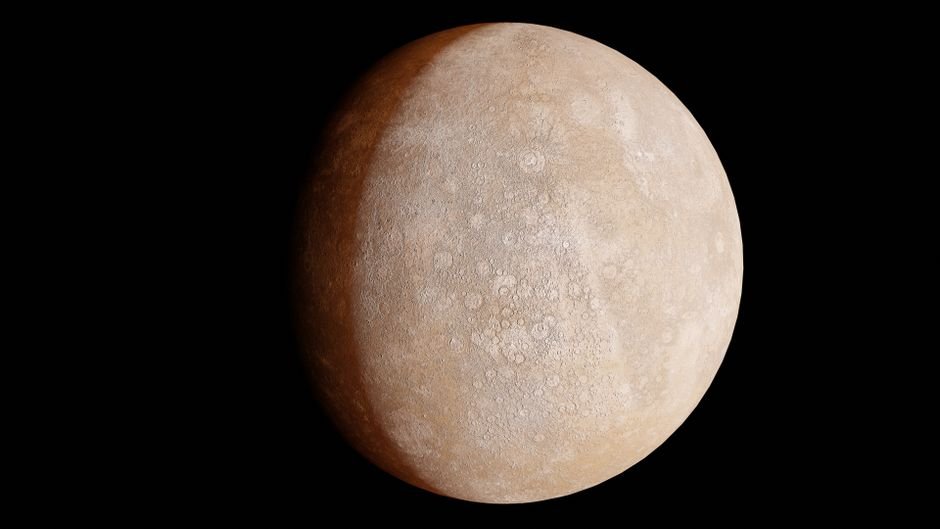
Mercury, the smallest and least explored of the solar system’s terrestrial planets, presents an environment of extremes. Its proximity to the Sun results in surface temperatures soaring to over 400 degrees Celsius during the day and plummeting to minus 180 degrees Celsius at night. Despite these harsh conditions, Mercury holds vital clues about the formation and evolution of the inner solar system, including Earth’s.
Previous Expeditions
Prior to BepiColombo, only two missions had extensively studied Mercury. NASA’s Mariner 10 conducted three flybys in 1974-1975, providing the first close-up images and revealing its magnetic field. Decades later, NASA’s MESSENGER (MErcury Surface, Space ENvironment, GEochemistry, and Ranging) mission orbited Mercury from 2011 to 2015, delivering comprehensive data on its surface, composition, and magnetosphere before intentionally crashing into the planet.
BepiColombo’s Unique Approach
BepiColombo distinguishes itself by deploying two separate scientific orbiters: the Mercury Planetary Orbiter (MPO), built by ESA, and the Mercury Magnetospheric Orbiter (MMO), also known as Mio, developed by JAXA. This dual-spacecraft approach allows for simultaneous, complementary observations of Mercury’s surface and interior, as well as its dynamic magnetosphere and interaction with the solar wind, providing a more holistic understanding than previous single-orbiter missions.
Core Scientific Objectives
The mission’s primary goals are diverse and ambitious. Scientists aim to understand Mercury’s origin and evolution, particularly its surprisingly dense core and the source of its magnetic field. They will investigate the planet’s internal structure, surface geology, and exosphere, which is a tenuous atmosphere interacting directly with the solar wind. Furthermore, BepiColombo will search for water ice in permanently shadowed craters at the poles and conduct experiments to test Albert Einstein’s theory of general relativity with unprecedented precision.
Key Developments: An Eight-Year Odyssey
The journey to Mercury was not direct but a meticulously planned, energy-efficient trajectory involving multiple planetary flybys and continuous solar electric propulsion. This complex path was necessary to gradually shed the enormous velocity gained from the Sun’s gravity and precisely align with Mercury’s orbit.
Launch and Interplanetary Cruise
BepiColombo launched on October 20, 2018, aboard an Ariane 5 rocket from Europe’s Spaceport in Kourou, French Guiana. The spacecraft comprised three main components for its cruise phase: the Mercury Transfer Module (MTM), housing the ion propulsion system; the MPO; and the Mio orbiter, stacked together.
Over the next eight years, the mission executed a series of gravity-assist maneuvers: one flyby of Earth in April 2020, two flybys of Venus in October 2020 and August 2021, and six flybys of Mercury itself, beginning in October 2021 and concluding just prior to orbit insertion. These close approaches provided crucial gravitational slingshots, slowing the spacecraft relative to the Sun and guiding it towards its final destination.
Mercury Orbit Insertion (MOI)
The critical Mercury Orbit Insertion (MOI) maneuver was successfully executed recently, following a prolonged firing of the MTM’s chemical thrusters to reduce BepiColombo’s speed sufficiently to be captured by Mercury’s gravitational pull. Following successful capture, the MTM, having completed its role, was jettisoned.
Subsequently, the two scientific orbiters, MPO and Mio, separated. The MPO, designed to withstand the intense heat and radiation closer to the planet, will settle into a low, elliptical polar orbit, ranging from approximately 480 km to 1500 km above the surface. Mio will operate in a higher, more elliptical orbit, typically between 590 km and 11,640 km, allowing it to study the planet’s magnetosphere from a broader perspective.
Technological Resilience
Operating so close to the Sun presents formidable engineering challenges. BepiColombo is equipped with advanced thermal control systems, including innovative ceramic-fibre thermal blankets and large radiators, to protect its sensitive instruments from solar radiation and extreme temperature fluctuations. The high-gain antenna for data transmission also features a unique pointing mechanism to maintain communication with Earth while shielding itself from the Sun’s glare, ensuring mission longevity and data integrity.
Impact: A New Era of Mercury Science
The successful arrival of BepiColombo opens a new chapter in planetary science, promising to deliver a wealth of data that will reshape our understanding of Mercury and, by extension, other rocky planets in the universe.
Expected Scientific Discoveries
The dual orbiters, carrying a total of 16 scientific instruments, are poised to make groundbreaking discoveries. The MPO will provide detailed maps of Mercury’s surface composition, search for volatile compounds, and precisely measure its gravitational field to infer internal structure. Its laser altimeter will create a topographical map of unprecedented accuracy, revealing subtle geological features.
Mio, on the other hand, will focus on the interaction between the solar wind and Mercury’s magnetosphere, which is unusually small and dynamic. Its instruments will measure magnetic fields, plasma, and energetic particles, helping scientists understand how the magnetosphere is generated and how it protects the planet from solar radiation. The mission’s long operational phase is expected to provide insights into the long-term evolution of Mercury’s magnetic field and its exosphere, including seasonal variations and responses to solar events.
Advancing Planetary Science
Data from BepiColombo will be crucial for comparative planetology, offering insights into why Mercury, Venus, Earth, and Mars, despite forming in similar regions of the solar nebula, evolved so differently. Understanding Mercury’s extreme environment can also inform our knowledge of exoplanets that orbit very close to their host stars, which are increasingly being discovered by ground and space-based telescopes.
Technological Legacy
Beyond scientific data, BepiColombo’s journey is a testament to international collaboration and engineering ingenuity. The development of its advanced propulsion system, thermal protection, and precise navigation techniques will serve as a blueprint for future deep-space missions facing similar environmental challenges, pushing the boundaries of what is achievable in space exploration.
What Next: Commissioning and Science Operations
With orbit insertion complete, BepiColombo now enters a critical commissioning phase. Over the next several months, engineers and scientists will meticulously activate and calibrate each of the 16 instruments on both the MPO and Mio spacecraft. This involves extensive testing to ensure all systems are functioning optimally in the harsh Mercury environment and that data collection can begin reliably.
Beginning of Science Mission
Once commissioning is finalized, expected in the coming months, the main science mission will officially commence. The nominal mission duration is planned for one Earth year, with a potential extension of another year or more, depending on the health of the spacecraft and the scientific returns. During this period, both orbiters will continuously collect and transmit vast amounts of data back to Earth via ESA’s and JAXA’s deep space communication networks.
Scientists globally will then analyze this unprecedented dataset, leading to a cascade of new publications, theories, and a deeper understanding of Mercury. The mission promises to keep the scientific community engaged for years, potentially decades, as they unravel the mysteries of the solar system’s innermost world.


