
Clashes erupt in France as ‘Black Thursday’ protests sweep the nation – NBC News
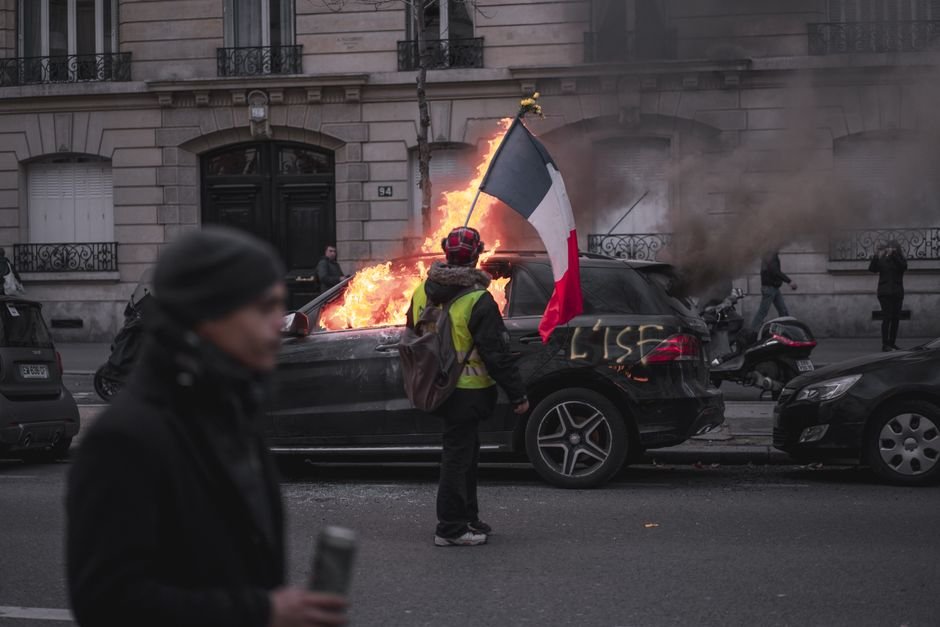
Widespread clashes and significant disruptions swept across France on Thursday, January 19, 2023, as millions participated in nationwide protests against the government’s proposed pension reforms. Dubbed ‘Black Thursday’ by some, the demonstrations saw hundreds of thousands take to the streets in major cities like Paris, Marseille, Lyon, and Nantes, leading to confrontations with police and widespread transportation paralysis.
Background: France’s Contentious Pension Reform
The nationwide protests were ignited by President Emmanuel Macron’s government’s resolute push to overhaul France’s complex and cherished pension system. At the heart of the proposed reform is the increase of the legal retirement age from 62 to 64 years. This change, alongside a requirement for 43 years of contributions to qualify for a full pension, has become a flashpoint for public anger and union opposition.
Government’s Rationale
The government argues that the reform is a financial necessity to prevent the pension system from collapsing into deficit. Projections from the Pension Orientation Council (COR) indicate that without reform, the system faces an annual deficit of around 10-14 billion euros by 2030. President Macron and Prime Minister Élisabeth Borne emphasize that the measure is vital for ensuring the long-term solvency and fairness of the system amidst an aging population and declining birth rates. They point to other European countries, many of which have higher retirement ages, as a comparative justification.
Union and Public Opposition
Conversely, a broad coalition of France’s largest trade unions, including the CGT, FO, CFDT, CFE-CGC, and UNSA, vehemently oppose the reforms. They contend that raising the retirement age disproportionately affects those who start working young and those in physically demanding professions. Unions argue that alternative funding solutions, such as taxing the wealthy or increasing employer contributions, have not been adequately explored. Public opinion polls consistently show strong opposition to the reform, with a significant majority of French citizens disapproving of the age increase. This widespread disapproval fuels the large turnout at demonstrations.
History of Reform Attempts
Pension reform has been a recurring, politically charged issue in France for decades. Previous attempts, notably in 1995 and 2019-2020, also triggered massive strikes and protests, some of which forced governments to back down or significantly alter their plans. Macron’s first attempt at a points-based universal pension system in 2019 was shelved due to the COVID-19 pandemic, but the current proposal marks a renewed determination to tackle the issue. The current reform’s focus on a direct age increase is seen by many as a simpler, more direct, and therefore more confrontational approach.
Key Developments on ‘Black Thursday’
January 19, 2023, witnessed one of the largest coordinated protest actions in France in recent years, impacting virtually every sector and region.
Massive Turnout
The scale of participation was immense. According to the Ministry of Interior, approximately 1.12 million people demonstrated nationwide. However, the CGT union, a key organizer, claimed a much higher figure, estimating over 2 million participants across the country. In Paris alone, police reported 80,000 protesters, while the CGT put the number closer to 400,000. Similar discrepancies were reported in other major cities, highlighting the widespread nature of the dissent.
Geographic Spread and Urban Clashes
Protests erupted in over 200 cities and towns, from major metropolises to smaller regional centers. While most demonstrations remained peaceful, significant clashes broke out in several urban areas.
Parisian Confrontations
In Paris, the march began peacefully from Place de la République, heading towards Place de la Bastille. However, as the day progressed, tensions escalated. Groups of individuals, often identified by authorities as «black bloc» anarchists, engaged in vandalism, smashing bus shelters, breaking storefronts, and setting bins on fire. Police responded with tear gas and stun grenades to disperse crowds, particularly around the Place de la Bastille and along the Boulevard Beaumarchais. At least 30 arrests were made in the capital for various offenses, including property damage and assaulting officers.
Incidents in Other Cities
Similar scenes unfolded in other French cities. In Nantes, projectiles were thrown at police, who retaliated with tear gas. Lyon saw some property damage and minor skirmishes. In Marseille and Bordeaux, while protests were largely peaceful, the sheer volume of participants caused significant disruption. The widespread nature of these incidents underscored the intensity of the opposition.
Widespread Disruptions and Strikes
The day was marked by extensive strikes that crippled public services and transportation networks across the nation.
Transportation Paralysis
The national rail operator SNCF reported severe disruptions, with an estimated 70-80% of train services canceled. High-speed TGV lines, regional trains, and suburban RER lines in the Paris region were all heavily affected. Paris’s RATP public transport network also saw significant reductions in metro and bus services. Air traffic control strikes led to the cancellation of around 20% of flights at Paris-Orly Airport and other regional airports, causing considerable inconvenience for travelers.
Impact on Public Services
The strikes extended beyond transportation. The Ministry of National Education reported that approximately 70% of primary school teachers were on strike in some regions, leading to widespread school closures or limited operations. Energy sector workers also participated, leading to minor power cuts in some areas and impacting refinery operations. Public hospitals experienced staff shortages, though emergency services were generally maintained.
Union Statements and Government Reaction
Union leaders hailed the day as a resounding success, emphasizing the unprecedented unity across the major labor organizations. Laurent Berger, head of the CFDT, called it a «very powerful mobilization.» Philippe Martinez of the CGT urged the government to withdraw the reform. In response, Prime Minister Borne reiterated the government’s determination to proceed with the reform, while acknowledging the «legitimate concerns» of the protesters. President Macron, who was in Spain for a summit, maintained his stance, stating that the reform was «just and responsible.»
Impact of the Protests
The ‘Black Thursday’ protests had immediate and far-reaching consequences across various facets of French society.
Economic Repercussions
The widespread strikes and demonstrations incurred significant economic costs. Businesses, particularly in retail and hospitality sectors in city centers, reported substantial losses due to reduced foot traffic, closures, and occasional vandalism. The disruption to transportation and public services led to lost productivity across various industries. While precise figures are difficult to ascertain immediately, such large-scale industrial action typically costs the economy billions of euros.
Social and Political Fallout
The protests highlighted a deep societal division regarding the future of the pension system and the government’s reform agenda. Public opinion, already largely against the reform, may have hardened further after the events of January 19. The unity of the inter-union front, a rare occurrence in France, demonstrates the depth of collective opposition and strengthens the unions’ bargaining power. Politically, the demonstrations pose a significant challenge to President Macron’s second term, making it harder for him to implement other key reforms. His approval ratings, already modest, could face further pressure.
International Perception
The images of clashes and massive street protests in France resonated internationally, drawing comparisons to previous periods of social unrest. While France is known for its strong tradition of protest, the scale and intensity of ‘Black Thursday’ underscored the unique challenges faced by the Macron administration in pushing through contentious reforms.
What Next: The Road Ahead
The events of ‘Black Thursday’ mark not an end, but a significant escalation in the battle over France’s pension reform. Both the government and the unions appear entrenched in their positions.
Government’s Resolve
Despite the massive opposition, the Macron government has signaled its unwavering commitment to seeing the reform through. Prime Minister Borne and other ministers have repeatedly stated that the reform is non-negotiable in its core principle of raising the retirement age. The government plans to introduce the bill to the National Assembly for debate, likely using accelerated procedures given the urgency they perceive. There is a possibility that the government might invoke Article 49.3 of the French Constitution, allowing it to pass the bill without a parliamentary vote, though such a move would be highly controversial and could trigger a no-confidence vote.
Union Strategy and Future Actions
The inter-union front, buoyed by the strong turnout on January 19, has already announced further days of nationwide strikes and demonstrations. The next major day of action is scheduled for Tuesday, January 31, 2023, with unions hoping to maintain or even increase pressure on the government. Union leaders have emphasized their willingness to engage in dialogue, but only if the government is open to reconsidering the core aspect of raising the retirement age, a condition the government has so far rejected. The strategy involves sustained pressure through repeated strikes and public mobilization.
Legislative Process
The proposed pension reform bill is set to undergo parliamentary scrutiny. It will first be examined by parliamentary committees before being debated in the National Assembly, and subsequently the Senate. This legislative journey is expected to be fraught with intense political debate, amendments, and potential procedural battles. Opposition parties across the political spectrum, from the far-left NUPES coalition to the far-right National Rally, have vowed to fight the reform in parliament.
The coming weeks and months will be crucial in determining whether President Macron can successfully implement one of the defining reforms of his second term, or if the collective power of France’s unions and public opposition will force a retreat. The outcome will have lasting implications for France’s social model and political landscape.




Un comentario